Texas Opportunity Zone education • Tract verification • Federal program updates

Texas Opportunity Zone Map

Use this statewide reference image to identify areas worth researching, then verify any specific property or business address using official census-tract data.
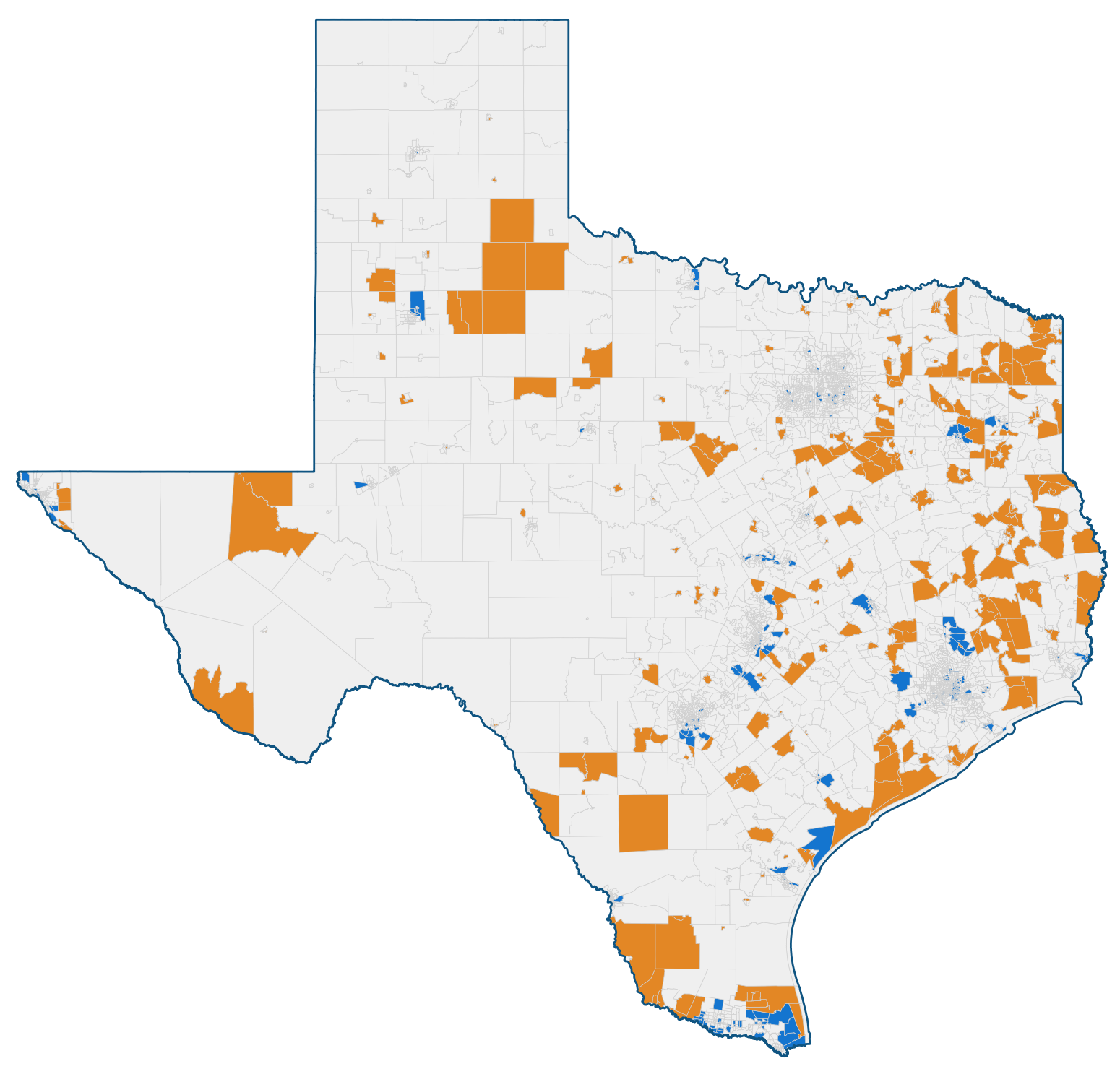
Texas map showing Opportunity Zone areas across the state
Click the map to enlarge. The uploaded image is used as a visual reference and should not replace official tract verification.
How to use it

Start broad, then narrow to the exact tract.

Opportunity Zones are based on census tracts—not cities, counties, ZIP codes, neighborhoods, or property descriptions.

  • Search the exact street address or parcel in an official federal mapping source.
  • Confirm the tract number and current designation period.
  • Save supporting evidence in the project file before committing capital.
  • Check whether a future designation round affects the project’s expected investment date.
Important: A property can be inside a Qualified Opportunity Zone without automatically qualifying for Opportunity Zone tax treatment. The taxpayer, fund, acquisition, improvement, business activity, timing, and holding-period requirements must also be satisfied.
Texas use cases

Where Opportunity Zone analysis commonly appears.

RE

Real estate development

Ground-up construction, rehabilitation, mixed-use, multifamily, industrial, hospitality, and other income-producing property strategies.

BQ

Operating businesses

Companies with meaningful activity, property, employees, revenue, and operations connected to a qualifying zone.

RU

Rural projects

Projects in qualifying rural areas may receive distinct treatment under the post-2025 framework, making precise location and guidance especially important.